
Standing Desk vs Desk Converter: Which Should You Buy?
A full standing desk is the better long-term pick for daily sit-stand use; a converter suits renters, tight budgets and first-time standers.
 By HomeOfficeAid
Updated November 12, 2026
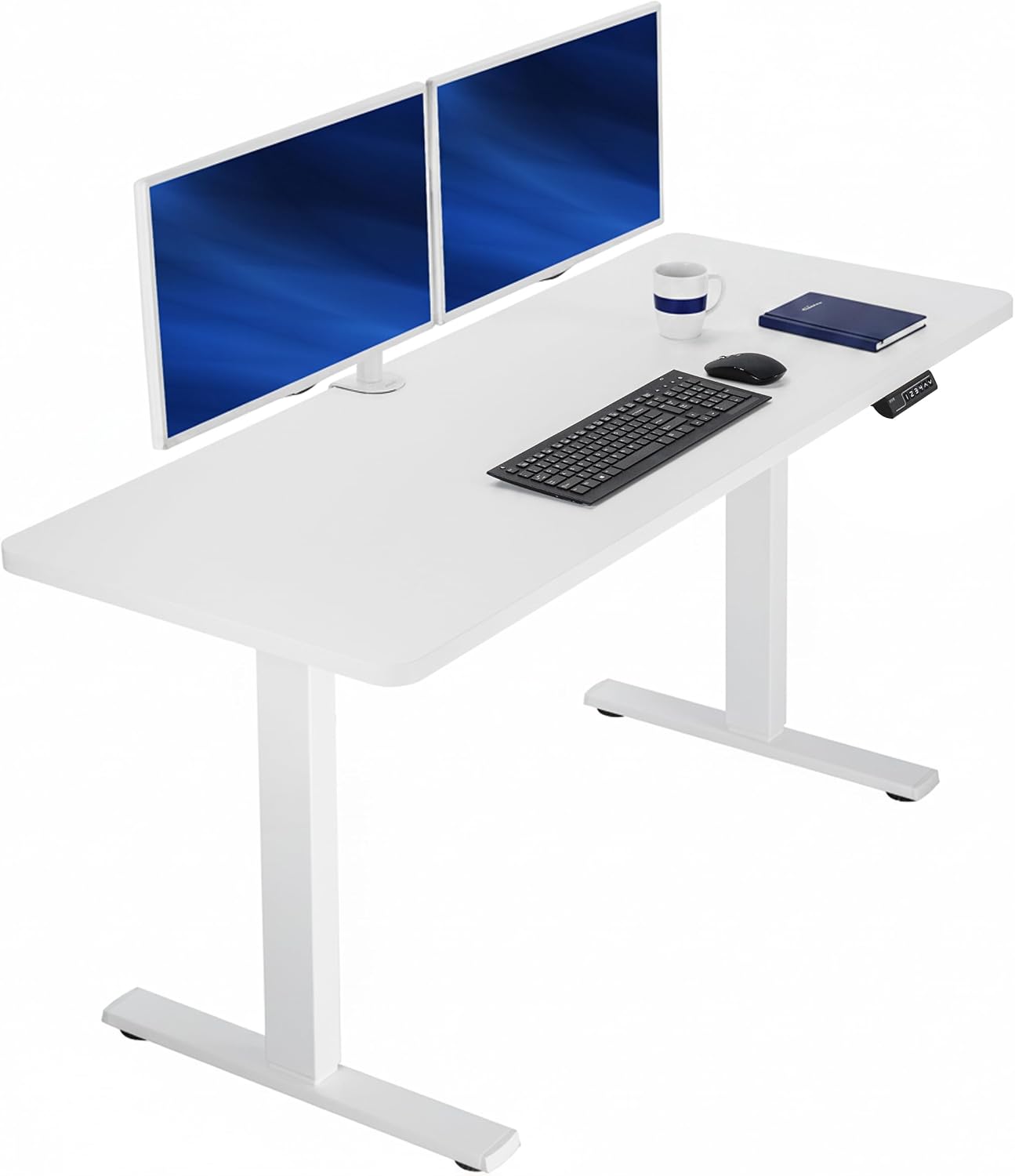
A full standing desk is the better long-term choice for most people who want to switch between sitting and standing every day. A desk converter makes sense when you cannot replace your desk, for example in a rented space, on a tight budget or when you want to try standing before committing. The trade-off is fit: university ergonomics programs point out that many converters raise the keyboard above a comfortable height for seated work and limit where the monitor can go.
Below we compare the two types point by point and explain who each one suits.
What Is the Difference?
- A standing desk (also called a sit-stand or height-adjustable desk) raises and lowers the whole work surface, usually with an electric motor or a hand crank.
- A desk converter (also called a desk riser or desktop unit) sits on top of an existing desk. It lifts a smaller platform that holds your keyboard, mouse and often your monitor.
Side-by-Side Comparison
| Factor | Standing desk | Desk converter |
|---|---|---|
| Seated keyboard height | Lowers the whole surface, so it can reach a proper seated height | Sits on a desk that is already there, so the keyboard often ends up higher than ideal when seated |
| Monitor placement | Monitor rides with the desk; use any stand or arm | Limited by the converter’s design; some models leave little room to place the screen far enough away or high enough |
| Work surface | Full desktop at the chosen height | Only the converter’s platform moves; the rest of the desk stays put |
| Installation | Assembly required; replaces your current desk | Usually placed on the desk with little or no assembly |
| Space | Needs floor space for a full desk | Uses the desk you already have |
| Moving it | Heavy; stays in one room | Can be moved to another desk |
| Upfront cost | Usually higher | Usually lower |
Why Ergonomics Programs Prefer Full Standing Desks
Colorado State University’s ergonomics program calls a properly selected full height-adjustable table “the preferred long-term solution for fit, flexibility, and usability.” It does not recommend desk-on-desk converters for routine use. Its reasons:
- Most converters sit on an existing desktop and raise the keyboard and mouse above a surface that is already too high for comfortable seated work.
- They may restrict monitor height and viewing distance.
- They can limit usable workspace.
The same program notes that some converters cost less at first, but says price should be weighed against these limits.
When a Desk Converter Is the Right Call
- You cannot replace the desk. Rented apartments, shared offices and built-in desks are common reasons.
- You want to try standing first. A converter is a lower-commitment way to find out whether you will actually use a standing position.
- You work at more than one desk. A converter can move with you.
- Your budget is tight. Converters usually cost less upfront.
If you go this route, choose a model with a separate keyboard tray that sits lower than the monitor platform, and check that its lowest position does not push your seated keyboard height too high. If the keyboard still ends up too high when you sit, OSHA’s guidance for work surfaces that cannot be lowered is to raise the chair instead; a footrest then keeps your feet supported. For specific models, see our picks for the best standing desk converters.
When a Full Standing Desk Is Worth It
- You plan to alternate positions every day. Switching is faster when the whole desk moves.
- You use a large monitor or two monitors. A full desk gives you room to place screens at the right distance.
- You are much taller or shorter than average. A full desk with a wide height range is more likely to fit both your seated and standing heights.
- You need the whole work surface at standing height, for example for paperwork next to your computer.
What to Check Before Buying Either One
- Height range against your own measurements. The lowest setting should reach your seated elbow height and the highest your standing elbow height. Our guide to standing desk height shows how to measure both.
- Keyboard and monitor on separate levels (converters), so the screen can sit higher than your hands.
- Weight capacity listed by the manufacturer, compared with your monitors, computer and accessories.
- Stability at full height. Read the manufacturer’s specifications and look for a crossbar or wide feet on desks, and a solid base on converters.
- Desk depth and footprint, so the converter fits on your desk with room left for your arms, or the desk fits your room.
Compact Standing Desks for Small Spaces
If space, not your existing desk, is the reason you are looking at converters, a compact full standing desk may fit instead. These are the smallest desks in our best standing desks guide.

Pros
- Built-in drawer, cable tray, hooks
- Compact 40 x 24 in top
- 3 memory presets
Cons
- 110 lb capacity
- Max height 45 in

Pros
- Narrow 19.7 in depth
- One-piece top, 176 lb capacity
- 3 memory presets
Cons
- Shallow for a desktop monitor
- 3 presets only

Pros
- Fits small spaces
- 4 memory presets
- Holes for optional casters
Cons
- Two-piece top with a joint
- Room for a laptop or one small monitor
Frequently Asked Questions
Is a desk converter as good as a standing desk?
For occasional standing, a good converter can work. For daily sit-stand use, ergonomics programs such as Colorado State University’s prefer a full height-adjustable desk because it fits both seated and standing positions better.
Can I put a desk converter on any desk?
Only if the desk is deep and sturdy enough for the converter’s base and its weight with your equipment. Check the converter’s footprint and the desk’s depth before buying.
Do desk converters wobble?
Some can, especially at their highest setting or with heavy monitors. Stability depends on the design and how much weight you load on it, so compare the manufacturer’s weight rating with your equipment.
Is a standing desk worth it if I only stand a little?
If you expect to stand only occasionally, a converter is a reasonable, lower-cost way to start. If you find you switch often, a full desk is the better fit long term.
Sources
- Colorado State University, Height-Adjustable Workstations
- Canadian Centre for Occupational Health and Safety, Office Ergonomics: Sit/Stand Desk
- OSHA, Computer Workstations eTool: Desks
About the author

HomeOfficeAid writes reviews and buying guides for HomeOfficeAid.